A brain-focused peptide tested in human studies of cognition and neurodegenerative conditions, without an established clinical benefit.
Microtubule stabilityTau biologyCognitive trials
Substantial human testing, but the pivotal PSP trial was negativeDavunetide reached a 313-person phase 2/3 study and smaller cognition trials. The programme shows meaningful exposure and feasibility data, yet no approved neurological benefit emerged.
Explore NAP / Davunetide
WHY PEOPLE ARE INTERESTED
What did researchers hope Davunetide could do?
Davunetide moved well beyond animal work. Its microtubule and tau rationale led to intranasal trials in mild cognitive impairment, schizophrenia and progressive supranuclear palsy—making the negative clinical findings central to the story.
Start with the big picture
These cards show what NAP / Davunetide is best known for and where the interest comes from. When you want the detail, open Research for the studies or Evidence for a quick view of how strong the support is.
The main reasons this compound attracts attention. The Research and Evidence sections give you the deeper scientific picture.
Nerve-cell structure
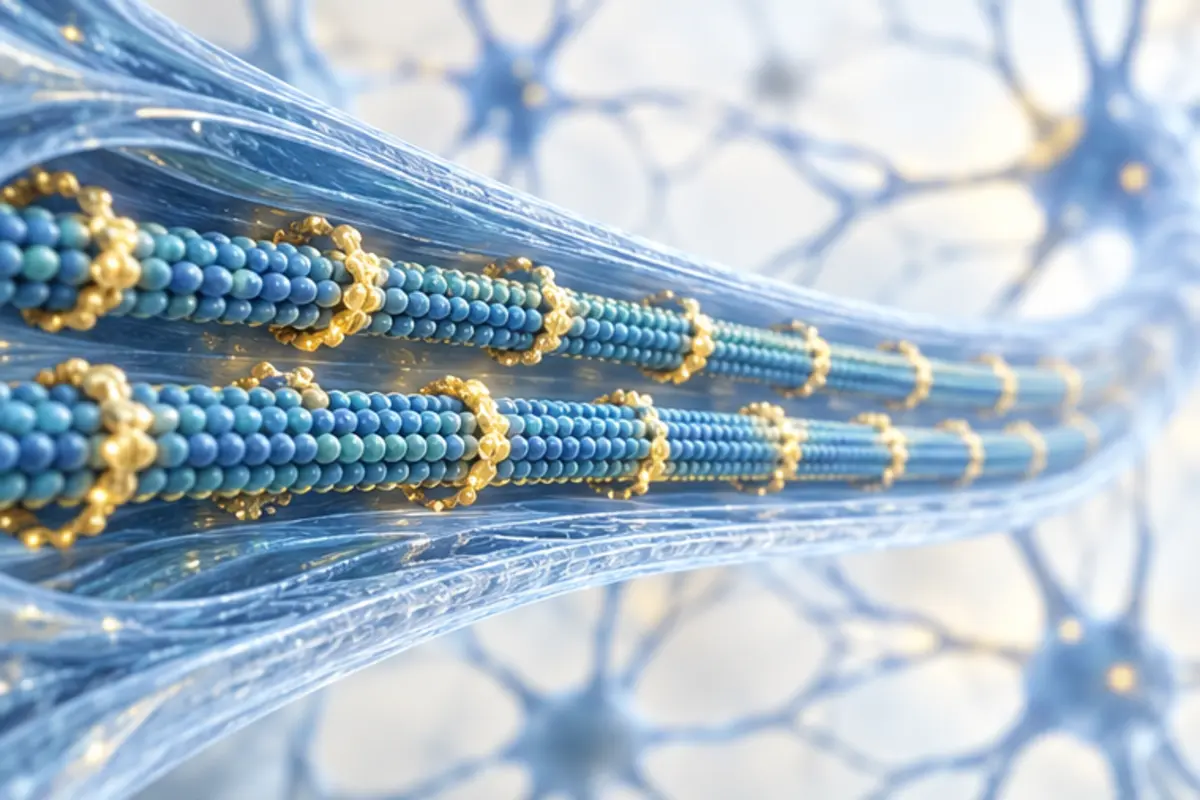
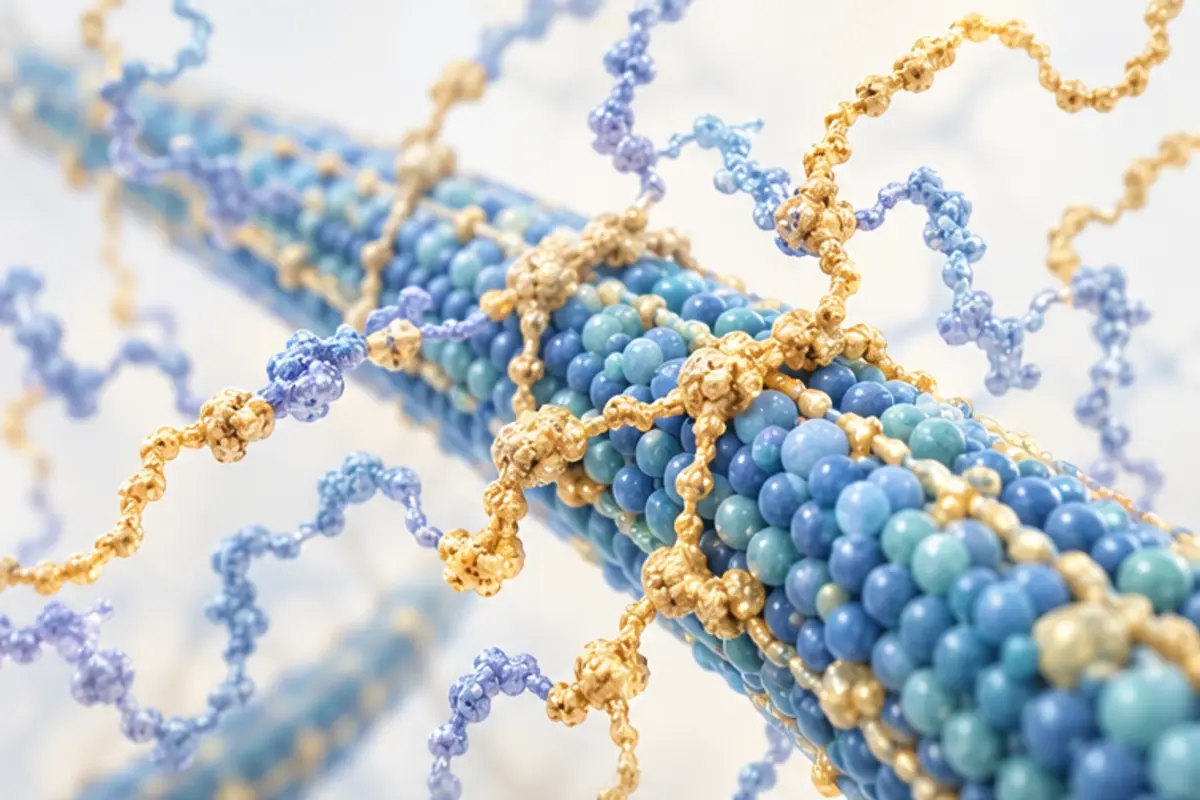
A key part of the research story is supporting microtubules — tiny internal structures that help nerve cells keep their shape and transport materials.
WHAT THE RESEARCH SAYS
Preclinical work supports interactions with microtubule-related processes, but a mechanism does not guarantee slower neurological decline.
Evidence so farStrong preclinical rationale
Tau-related neuroprotection
Progressive supranuclear palsy provided a direct clinical test because abnormal tau biology is central to the disease.
WHAT THE RESEARCH SAYS
Despite that rationale, 30 mg twice-daily intranasal treatment for 52 weeks did not improve either primary clinical endpoint.
Evidence so farHuman efficacy negative in PSP
Cognition signals
Earlier studies explored attention, working memory and functional brain measures.
WHAT THE RESEARCH SAYS
Small exploratory findings appeared in some analyses, but no robust, replicated cognitive treatment effect was established.
Evidence so farEarly and uncertain human evidence
A valuable clinical test
Davunetide demonstrates how a promising neuroprotective mechanism can be examined in a large, international trial.
WHAT THE RESEARCH SAYS
The PSP result was neutral, while nasal adverse effects supplied practical route-specific safety information.
Evidence so farSubstantial human programme
Interest first. Evidence next.We start with why people are talking about NAP / Davunetide, then show what the research actually supports so you can see the full picture.
HOW TO READ THE RESEARCH STORY
A strong neurobiology rationale tested by a neutral pivotal trial
Davunetide reached meaningful human development. Earlier cognition signals and extensive microtubule research must now be read alongside the negative 52-week PSP result.
NAPVSIPQ
01ADNP fragment
Eight-amino-acid NAP sequence
→
02Microtubules
Tau and cytoskeletal neuroprotection rationale
→
03Human trials
MCI, schizophrenia and 313-person PSP study
→
04Clinical result
No slowing of PSP on either primary endpoint
WHAT THE HUMAN PROGRAMME TESTED
Microtubule and tau biology put to a serious clinical test
Davunetide progressed from ADNP-fragment biology into international human trials. Its programme contains both exploratory cognition findings and one decisive negative result in PSP.
01
Neuronal structure
Preclinical research links NAP with microtubule-related processes and neuronal resilience.
02
Cognition
Smaller 12-week trials explored attention, working memory and functional brain outcomes.
03
PSP
A 313-person trial used 30 mg intranasally twice daily for 52 weeks.
04
Clinical boundary
The PSP trial did not improve disease severity or activities of daily living.
RESEARCH LANDSCAPENAP · microtubules · tau · phase 2/3 result
NAPVSIPQMCISchizophreniaPSP
Studies & trials
Studies & trials
Original publication · PubMed · trial registry where available
Controlled intranasal studies included a 313-person phase 2/3 trial and smaller cognition programmes.
✓
Clinical efficacyEarly
1/5 evidence depth
Davunetide did not improve progression in PSP; broader cognitive efficacy remains unconfirmed.
◇
Safety evidenceDeveloping
3/5 evidence depth
Trial safety data exist, including route-specific nasal events, but unsupervised products and long-term use outside trials are not characterised.
⌁
Preclinical evidenceStrong
4/5 evidence depth
Cell and animal work supports microtubule, tau and neuroprotection hypotheses.
HOW TO READ THESE SCORESStrong preclinical evidence · strong human evidence
These are editorial evidence-depth ratings on a 1–5 scale, not a statistical result or a single scientific formula. They summarise how much relevant evidence is present in each separate category and how mature that evidence is.
Human evidenceHow much direct research in people is available and how developed it is.
Clinical efficacyWhether human studies demonstrate meaningful outcomes for the claims being discussed.
Safety evidenceHow much human safety, tolerability and longer-term follow-up information is available.
Preclinical evidenceThe depth of laboratory and animal research supporting biological plausibility.
A measured biological response can be valuable evidence without establishing a self-administered protocol or a durable treatment benefit.
From promising signals to human evidencePreclinical research can reveal promising biological signals. Human studies show how far those signals have translated into real-world outcomes.
What people are exploring
PEOPLE & EXPERIENCE
Why people are exploring Davunetide
Memory, tau and neuroprotection goals—mapped against real intranasal human trials, uncertain cognition signals and a negative pivotal PSP result.
Community goals · human trial exposure · efficacy boundary
Why this matters
Davunetide is explored around memory, neuroprotection and tau-related disease. Unlike many community peptides it has substantial human trial data, but the largest and most clinically decisive study did not show benefit in PSP.
Experiences can reveal recurring goals, perceived changes and practical questions that formal studies may not yet address. They can suggest what deserves investigation, but cannot isolate the effect of one compound from rehabilitation, time or other changes.
+
⌁WHAT RESEARCH ADDSScientific context
Human and preclinical research helps test whether an idea is biologically plausible, whether it appears in people and how confidently the result can be separated from chance, bias or other parts of recovery.
01Frequently discussed
Frequently discussedPositive interest with important uncertainty
Memory and attention
Interest often draws on earlier mild-cognitive-impairment and schizophrenia studies.
HUMAN EVIDENCE
Twelve-week trials generated exploratory signals but no robust, replicated overall cognitive benefit.
Trial duration should not be mistaken for a successful maintenance schedule.
◇
Experience can start the question. Research has to test it.
Community reports can surface patterns worth exploring. Controlled human research is what tests whether those patterns are reliable, clinically meaningful and attributable toNAP / Davunetide, while the available studies show how far that question has already been answered.
Dose & duration
DOSE & DURATION
See the numbers in their proper context
Compare published study protocols with the patterns people discuss in the community. The two are intentionally kept separate so an anecdotal routine is never mistaken for clinical guidance.
Research protocols · community patterns · calculator tools
Research dose ≠ recommendation. A dose used in a study describes that study only and does not establish an appropriate dose for an individual outside the research setting.
ONE ANECDOTAL COMMUNITY EXAMPLE
Human dose arms with no successful maintenance regimen
These are separate intranasal trial arms—not a titration ladder. The highest and longest protocol failed to slow PSP.
ANECDOTAL · UNVALIDATED
1MCI low arm
5 mg · once daily
Randomized 12-week research arm
2MCI / schizophrenia
15 mg · twice daily
Higher 12-week research arm
3PSP phase 2/3
30 mg · twice daily
52-week pivotal protocol
4Clinical result
No PSP benefit
Both primary endpoints were neutral
What human studies administeredIntranasal arms ranged from 5 mg once daily to 30 mg twice daily across different diagnoses and trial designs.
What the protocols do not establishThey do not create an approved dose, a nootropic titration, a preventive cycle or evidence that higher exposure works better.
◎
ROUTE & DELIVERYNasal tolerability became part of the evidence
Epistaxis, rhinorrhoea and nasal discomfort were more frequent with davunetide in the PSP trial. Device and formulation still matter.
PROFESSIONAL SOURCE CONTEXT
The source documents the published phase 2/3 exposure and its negative efficacy result. It is not a dosing recommendation.
These were randomized research arms, not a validated nootropic titration or maintenance plan.
↗
HOW TO READ THE STEP-UPThe start and target come from the published protocol.
The visual shows the opening amount, target amount and total study window. It does not invent intermediate steps: the linked paper or authorised product information remains the source for the complete escalation schedule.
Often combined with
OFTEN COMBINED WITH
Why people explore pairings with NAP / Davunetide
See the thinking behind community-named stacks, the different role each component is proposed to play, and how much of that idea has actually been tested as a combination.
Community rationale · component roles · evidence boundary
Potential first, evidence in context. Pairings are usually explored because their research stories appear complementary. That makes them interesting to study, but does not yet prove extra benefit or safety.
CURRENT COMPOUNDNAP / Davunetide
→
OFTEN EXPLORED WITHDavunetide + specialist neurological care
Davunetide + Diagnosis-specific therapy and rehabilitation
→
OFTEN EXPLORED WITHDavunetide + cognitive rehabilitation
Davunetide + Targeted cognitive strategies
→
OFTEN EXPLORED WITHDavunetide + Semax / Pinealon
Davunetide + Experimental cognitive peptides
Combination-specific human research is the strongest evidence for what a pairing adds. Evidence for either ingredient alone should not be silently transferred to the combination.
DNAP / DAVUNETIDE IS USUALLY DISCUSSED AROUNDMicrotubule and tau neuroprotection tested in human trials
The programme reached phase 2/3, but davunetide did not slow PSP and has no approved cognitive indication.
+
PTHE PAIRED APPROACH MAY ADDDiagnosis-specific rehabilitation or experimental cognitive peptides
Rehabilitation can have independent value. Semax and Pinealon are community pairings without controlled combination evidence.
Exploratory cognition signals have not produced an approved treatment, while retail formulation and long-term self-use are unvalidated.
What the current evidence saysNasal bleeding, runny nose and discomfort were more common in the PSP trial, while serious events reflected a medically vulnerable population. New gait, vision, swallowing, speech, memory or behavioural changes need neurological assessment rather than experimental stacking.
01 · OBSERVEDPublished safety findings
The summary above reflects the human or preclinical evidence currently represented on this profile.
02 · UNCERTAINGaps still matter
Limited follow-up, small studies or absent controlled trials can leave uncommon and longer-term risks unresolved.
03 · CONTEXTProduct and regulatory status
Route, product identity, quality and regulatory status can materially change the safety context; see the linked status sources below.
NASAL EFFECTSBleeding and discomfort were measured
Epistaxis, rhinorrhoea and nasal discomfort were more frequent with davunetide in the PSP trial.
NEUROLOGICAL CHANGESeek diagnosis before experimentation
New falls, gaze difficulty, swallowing change, focal weakness, confusion or rapid cognitive decline needs clinical assessment.
PRODUCT & STACKSTrial formulation is not a retail guarantee
Device delivery, concentration, purity and combinations with other CNS-active compounds change uncertainty.