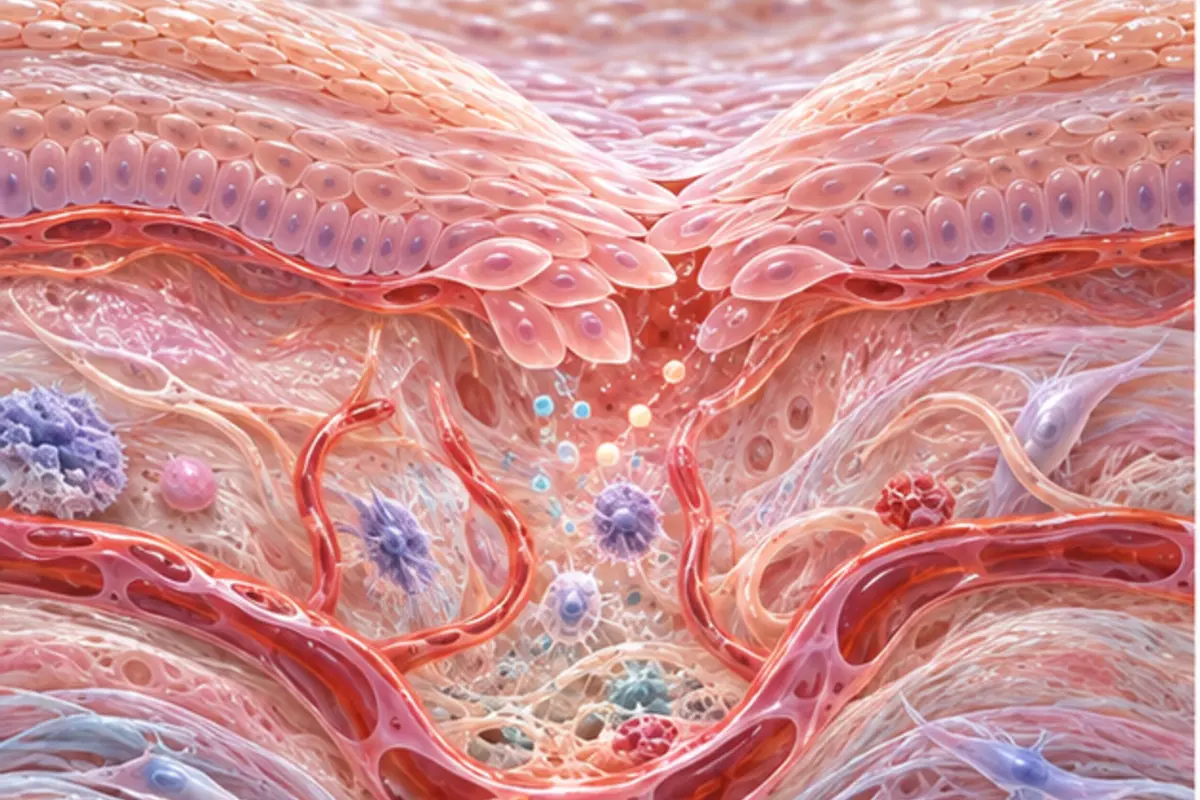
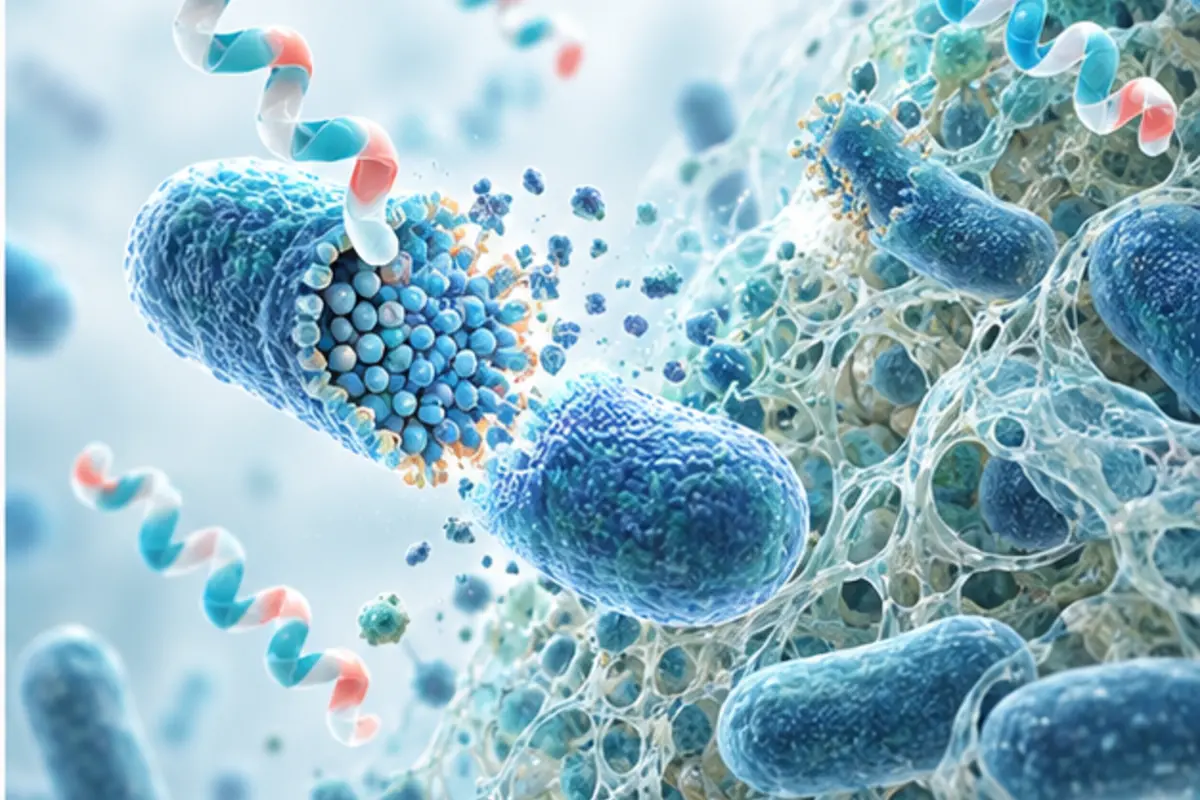
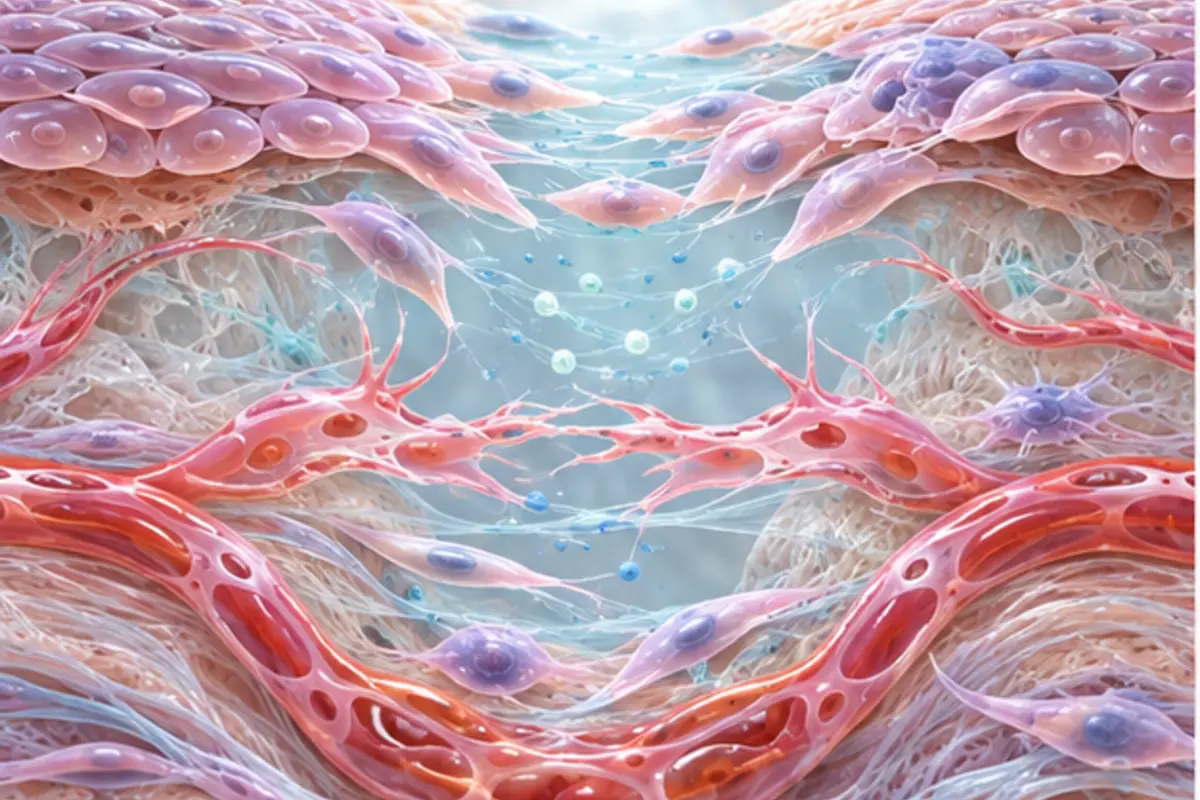
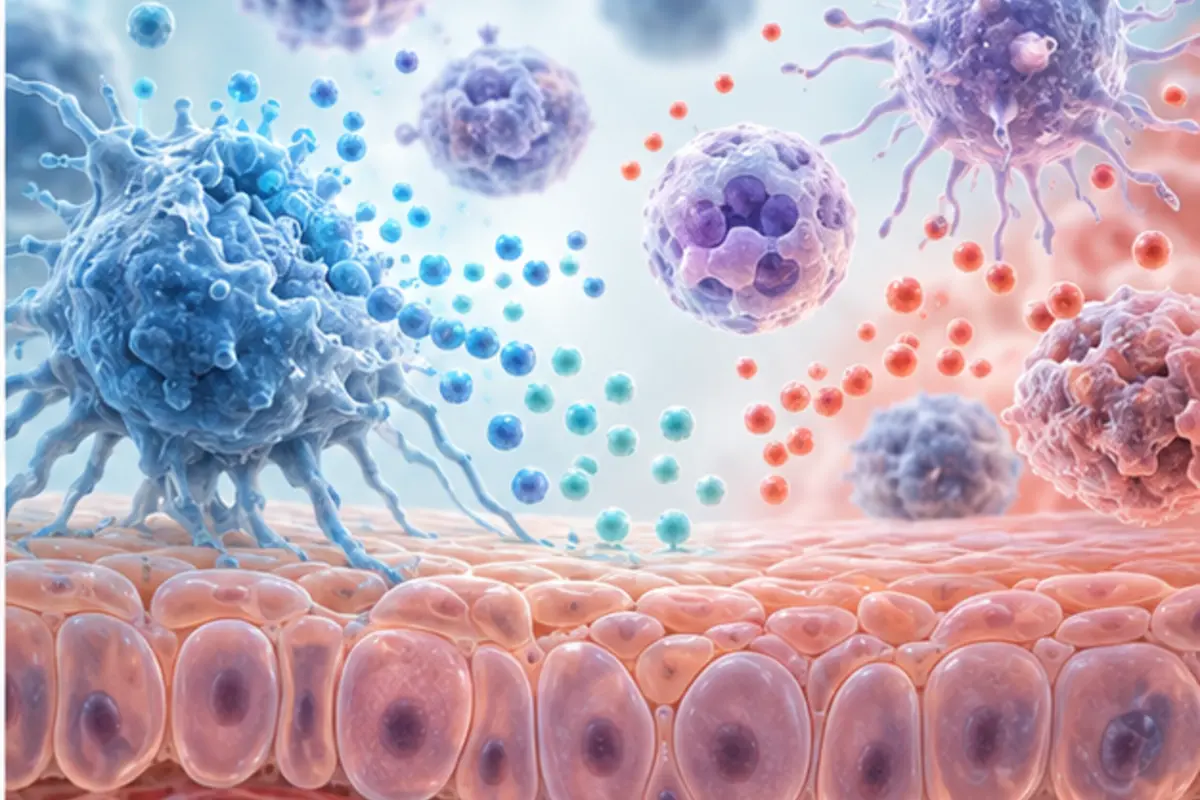
Produced naturally by the body, LL-37 forms part of our defences and is being explored for antimicrobial activity, inflammation and wound healing.
Wound healingAntimicrobial defenceInnate immunity
Small topical human trials; systemic use remains experimentalTopical LL-37 has entered randomized wound trials, including a positive small venous-ulcer study, but dose-response was not simply 'more is better' and injectable use lacks comparable evidence.
Explore LL-37
WHY PEOPLE ARE INTERESTED
Where does LL-37 research look most promising?
LL-37 has direct biological relevance because it is part of human innate defence. Its actions can be antimicrobial, inflammatory or repair-related depending on concentration and context.
Start with the big picture
These cards show what LL-37 is best known for and where the interest comes from. When you want the detail, open Research for the studies or Evidence for a quick view of how strong the support is.
The main reasons this compound attracts attention. The Research and Evidence sections give you the deeper scientific picture.
Chronic wound healing
Topical wound repair is the clearest clinical-development area.
WHAT THE RESEARCH SAYS
A first-in-man trial reported faster healing at 0.5 and 1.6 mg/mL. The larger phase IIb trial was neutral overall, with an exploratory signal in larger ulcers.
Evidence so farMixed human trial evidence
Antimicrobial defence
LL-37 can act against a range of microbes in laboratory systems.
WHAT THE RESEARCH SAYS
Laboratory antimicrobial activity does not establish that systemic dosing treats human infection.
Evidence so farStrong mechanistic evidence
Cell migration & repair
LL-37 influences keratinocytes, endothelial cells and repair signalling.
WHAT THE RESEARCH SAYS
Preclinical work supports re-epithelialisation and wound-environment effects.
Evidence so farPreclinical + human wound context
Immune signalling
LL-37 can recruit and modify immune-cell responses.
WHAT THE RESEARCH SAYS
The same context-dependent biology may support defence or contribute to inflammatory disease.
Evidence so farComplex mechanistic evidence
Interest first. Evidence next.We start with why people are talking about LL-37, then show what the research actually supports so you can see the full picture.
HOW TO READ THE RESEARCH STORY
A human defence peptide with a narrow topical clinical signal
LL-37 has credible wound and host-defence biology. The useful question is how a concentration-dependent topical signal translates—not whether every route inherits the same benefit.
CATH-37
01Host defence
Endogenous antimicrobial and immune signalling
→
02Tissue repair
Keratinocyte, vascular and wound responses
→
03Topical trials
Early positive signal, larger mixed result
→
04Systemic boundary
Injected use has no comparable human programme
WHAT RESEARCH IS EXPLORING
Host defence and repair biology tested in a specific topical wound setting
LL-37 combines antimicrobial action, immune signalling and tissue repair. Two venous-leg-ulcer trials bring that biology into people, while their mixed results and non-linear dose response argue against broad route-independent claims.
01
Barrier defence
LL-37 is an endogenous cathelicidin with direct antimicrobial and immune-modulating functions.
02
Repair signalling
Keratinocyte migration, angiogenesis and wound-environment effects connect host defence with tissue closure.
03
Topical trials
A small first-in-man study was encouraging; a 148-person phase IIb study was neutral overall.
04
Systemic boundary
Neither trial establishes injected immune support, infection treatment or a general healing dose.
RESEARCH LANDSCAPEBarrier defence · repair · topical translation
Small randomized topical wound trials provide direct human evidence.
✓
Clinical efficacyLimited
2/5 evidence depth
Clinical efficacy is not established across wound types, infections or systemic use.
◇
Safety evidenceLimited
2/5 evidence depth
Topical trial safety data exist, but systemic and long-term safety are uncertain.
⌁
Preclinical evidenceStrong
4/5 evidence depth
A large mechanistic literature covers antimicrobial, immune and repair effects.
HOW TO READ THESE SCORESStrong preclinical evidence · limited human evidence
These are editorial evidence-depth ratings on a 1–5 scale, not a statistical result or a single scientific formula. They summarise how much relevant evidence is present in each separate category and how mature that evidence is.
Human evidenceHow much direct research in people is available and how developed it is.
Clinical efficacyWhether human studies demonstrate meaningful outcomes for the claims being discussed.
Safety evidenceHow much human safety, tolerability and longer-term follow-up information is available.
Preclinical evidenceThe depth of laboratory and animal research supporting biological plausibility.
Two topical venous-ulcer trials; phase IIb neutral overall
MechanismStrong
Extensive antimicrobial, barrier and immune biology
Main gapRoute
No validated systemic dose, efficacy or long-term safety
Keep route, study setting and outcome together
A measured biological response can be valuable evidence without establishing a self-administered protocol or a durable treatment benefit.
From promising signals to human evidencePreclinical research can reveal promising biological signals. Human studies show how far those signals have translated into real-world outcomes.
What people are exploring
PEOPLE & EXPERIENCE
Why people are exploring LL-37
Wound repair, biofilm questions and host defence—mapped against genuine topical human trials and the much larger gap around systemic use.
Community goals · topical trial data · route boundary
Why this matters
Interest centres on chronic infections, immune resilience and wound repair. The most credible positive human signal is topical wound research, not systemic self-treatment.
Experiences can reveal recurring goals, perceived changes and practical questions that formal studies may not yet address. They can suggest what deserves investigation, but cannot isolate the effect of one compound from rehabilitation, time or other changes.
+
⌁WHAT RESEARCH ADDSScientific context
Human and preclinical research helps test whether an idea is biologically plausible, whether it appears in people and how confidently the result can be separated from chance, bias or other parts of recovery.
01Frequently discussed
Frequently discussedPositive interest with important uncertainty
Chronic wound healing
The published topical trial is often cited as proof of broad healing potential.
HUMAN EVIDENCE
Small randomized venous-ulcer studies provide a genuine early clinical signal.
A topical trial cannot validate systemic self-administration.
◇
Experience can start the question. Research has to test it.
Community reports can surface patterns worth exploring. Controlled human research is what tests whether those patterns are reliable, clinically meaningful and attributable toLL-37, while the available studies show how far that question has already been answered.
Dose & duration
DOSE & DURATION
See the numbers in their proper context
Compare published study protocols with the patterns people discuss in the community. The two are intentionally kept separate so an anecdotal routine is never mistaken for clinical guidance.
Research protocols · community patterns · calculator tools
Research dose ≠ recommendation. A dose used in a study describes that study only and does not establish an appropriate dose for an individual outside the research setting.
ONE ANECDOTAL COMMUNITY EXAMPLE
A cautious systemic example kept apart from topical wound trials
The example below reflects recurring community discussion about injected LL-37. The human studies used formulated topical cream on ulcers with compression care.
ANECDOTAL · UNVALIDATED
1Days 1–3
100 mcg · once daily
Anecdotal systemic starting amount
2Days 4–7
100–200 mcg / day
Optional community-described step-up
3Weeks 2–4
Continue or stop
Short course descriptions vary
4After course
Pause & review
No evidence-based break interval
What people commonly discuss100–200 mcg/day by subcutaneous injection for roughly 2–4 weeks appears in community protocol summaries.
What remains unvalidatedNo human study validates injected LL-37 at these amounts, a systemic escalation, antimicrobial efficacy or a repeat schedule.
◎
ROUTE & DELIVERYTopical concentration cannot be converted to an injected dose
The wound trials used 0.5–3.2 mg/mL cream applied twice weekly within structured wound care. Concentration in a topical formulation does not equal systemic exposure.
PROFESSIONAL SOURCE CONTEXT
The source shows what has actually been studied. It does not validate the community example above or turn it into guidance.
No significant benefit in the full cohort. The larger-ulcer result was post hoc and needs confirmation.
↗
HOW TO READ THE STEP-UPThe start and target come from the published protocol.
The visual shows the opening amount, target amount and total study window. It does not invent intermediate steps: the linked paper or authorised product information remains the source for the complete escalation schedule.
COMMUNITY DISCUSSION
What people commonly discuss
Anecdotal / unvalidated · not equivalent to topical trials
STARTING APPROACHES
Community injection descriptions often start around 100 mcg/day and may move toward 200 mcg/day. These amounts have no validating human dose-finding study.
DURATION / CYCLES
Short 2–4-week courses are commonly described; topical use is product- and wound-specific.
MAINTENANCE DISCUSSION
No validated systemic titration, maintenance or break schedule exists.
Community patterns are anecdotal and unvalidated unless a linked human study independently supports the same approach.
Often combined with
OFTEN COMBINED WITH
Why people explore pairings with LL-37
See the thinking behind community-named stacks, the different role each component is proposed to play, and how much of that idea has actually been tested as a combination.
Community rationale · component roles · evidence boundary
Potential first, evidence in context. Pairings are usually explored because their research stories appear complementary. That makes them interesting to study, but does not yet prove extra benefit or safety.
CURRENT COMPOUNDLL-37
→
OFTEN EXPLORED WITHLL-37 + wound standard care
Topical LL-37 + Compression / wound care
→
OFTEN EXPLORED WITHLL-37 + thymosin alpha-1
LL-37 + Thymosin alpha-1
→
OFTEN EXPLORED WITHLL-37 + BPC-157
LL-37 + BPC-157
Combination-specific human research is the strongest evidence for what a pairing adds. Evidence for either ingredient alone should not be silently transferred to the combination.
LLL-37 IS USUALLY DISCUSSED AROUNDHost defence, wound biology and context-dependent inflammation
The strongest human setting is topical venous-ulcer care; systemic antimicrobial and immune-support use remains unvalidated.
+
PTHE PAIRED APPROACH MAY ADDStructured wound care or a second immune-modulating story
Compression and wound care belong to the tested clinical context. Thymosin alpha-1 is a community rationale, not a proven synergy.
Topical wound evidence cannot be transferred to an injected immune stack.
02Avoid infection delay
Suspected infection needs diagnosis and appropriate antimicrobial care, not an experimental pairing.
03Watch immune complexity
Combining immune-active compounds can increase uncertainty rather than create balanced immunity.
Safety context
◇
SAFETY & UNCERTAINTY
Concentration and route materially change the risk
01ENCOURAGING CONTEXTTopical human exposure has been studied
Two randomized venous-ulcer trials provide condition-specific tolerability data beyond laboratory research alone.
02THE IMPORTANT BOUNDARYHost defence is not simply immune boosting
LL-37 can be antimicrobial, repair-supporting, inflammatory or cytotoxic depending on concentration and tissue context.
03WHAT REMAINS UNKNOWNSystemic and chronic exposure
Injected pharmacokinetics, organ exposure, interaction risk and long-term immune effects are not established in people.
What the current evidence saysLL-37 can be cytotoxic or pro-inflammatory at some concentrations and is implicated in inflammatory skin biology. Small topical trials cannot establish the safety of systemic injection or chronic exposure.
01 · OBSERVEDPublished safety findings
The summary above reflects the human or preclinical evidence currently represented on this profile.
02 · UNCERTAINGaps still matter
Limited follow-up, small studies or absent controlled trials can leave uncommon and longer-term risks unresolved.
03 · CONTEXTProduct and regulatory status
Route, product identity, quality and regulatory status can materially change the safety context; see the linked status sources below.
WOUNDSUse proper wound and infection assessment
Hard-to-heal ulcers and suspected infection can require vascular review, debridement, compression or antimicrobial treatment.
ROUTEDo not convert topical concentration into injection
Milligrams per millilitre in a cream does not describe absorbed dose or validate a systemic amount.
PRODUCT QUALITYSterility and identity are separate risks
Unapproved injectable products add contamination, concentration and sequence-verification uncertainty.